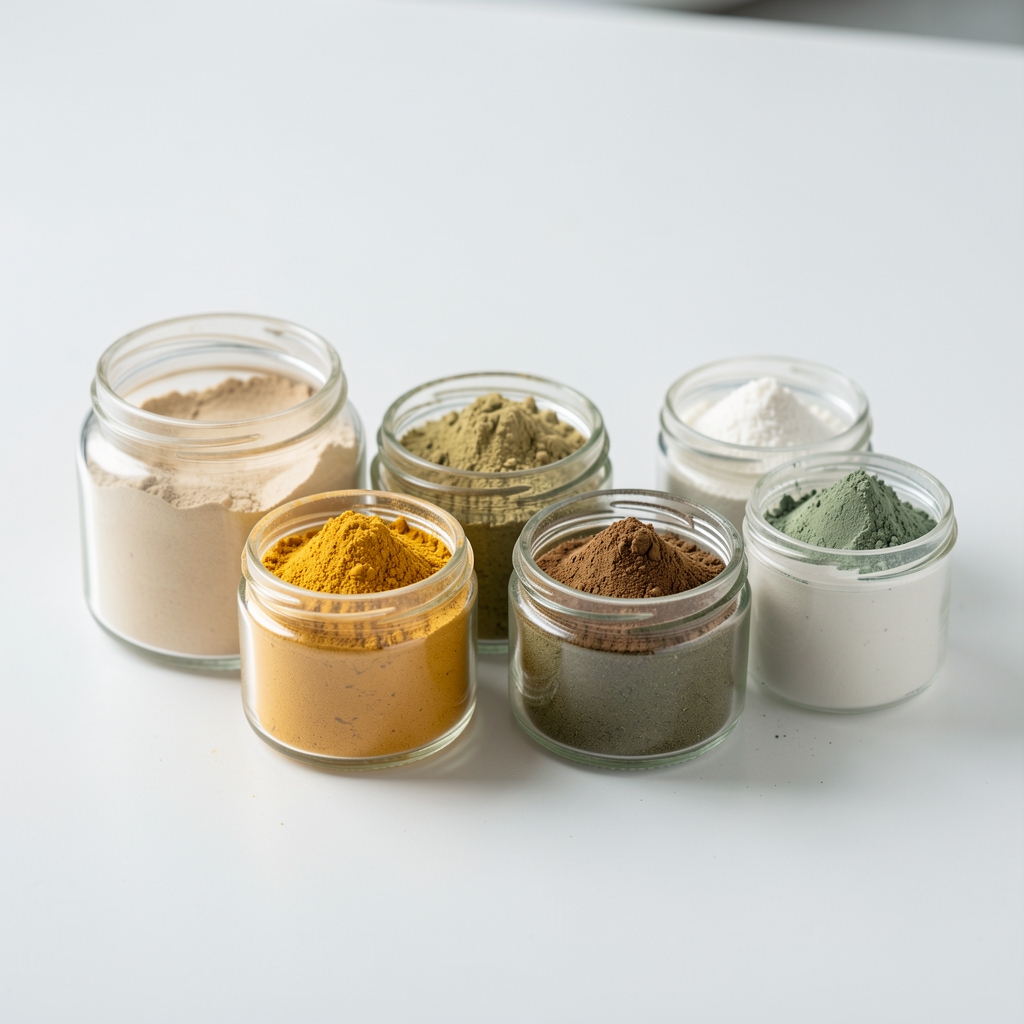
The adaptogen category occupies a well-documented but frequently misrepresented space in nutritional research. When one maps the published sourcing data against what reaches the retail shelf, a significant gap in compositional traceability becomes apparent. This article traces that gap from field to formulation.
What the Research Actually Documents
The published literature on adaptogens — a term first formalised in Soviet pharmacological research in the 1940s and later carried into Western nutritional science — identifies a group of botanical extracts documented for their role in normal stress response pathways. The most extensively cited examples include Withania somnifera (ashwagandha), Rhodiola rosea, Panax ginseng, and Eleuthero (Siberian ginseng). Each has a distinct profile in the published evidence base.
What the research consistently flags is a sourcing problem: the active constituent concentration in commercially available extracts varies considerably depending on extraction method, plant part used, and the growing region. A root extract standardised to 5% withanolides carries a different compositional profile than a whole-root powder, even when both are labelled under the same common name. This distinction rarely appears on a finished product label.
From a documentation standpoint, this means that the research published on ashwagandha root extract in a controlled setting cannot be straightforwardly applied to a product using whole-root powder at a different concentration. The industry broadly treats these as interchangeable; the published evidence base does not.
Sourcing Geography and Constituent Variance
Growing conditions introduce additional variance. Ashwagandha sourced from the arid regions of Rajasthan, India — the traditional cultivation zone documented in Ayurvedic records — carries a different withanolide concentration profile than ashwagandha cultivated in irrigated lowland conditions in other regions. Agricultural journals and crop science literature document this consistently; the supply chain for mass-market supplement sourcing does not always reflect this distinction.
Rhodiola rosea shows a similar geographical dependency. The Siberian and Tibetan highland varieties document the highest salidroside and rosavin concentrations in independent analytical studies. Lowland or greenhouse-cultivated stock, which is substantially cheaper to procure, shows measurably different constituent profiles. From a batch-documentation standpoint, a certificate of composition that confirms the geographic origin of the raw material carries more traceability value than one that records weight and appearance only.
For the informed reader evaluating a morning stack formulation, the relevant questions are not about brand marketing claims but about provenance documentation: Does the supplier certificate of composition record the harvest region? Is the extraction method standardised? Is there independent analytical verification of the constituent concentration on the finished batch?
"The gap between published research and formulated product is primarily a documentation gap, not a chemistry gap."
— Droma Dispatch Editorial Notes, January 2026
The Morning Routine Context
The appeal of adaptogens in a morning routine derives from their documented role in normal energy metabolism and the published evidence for their interaction with adrenal response pathways. Neither of these claims crosses into restricted health claim territory — they describe physiological processes, not outcomes. The distinction matters for how such ingredients are discussed in editorial content and how they are regulated in different jurisdictions.
In the Indonesian regulatory context, the natural ingredients sourced from the region's own botanical heritage — including Centella asiatica, Morinda citrifolia (noni), and selected species within the Zingiberaceae family — carry a distinct research and traditional documentation base that differs from the Western-derived adaptogen literature. Indonesian men's wellness formulations that draw on locally sourced botanical extracts represent an under-documented but growing area of interest in nutritional publishing.
The morning routine framing places adaptogens alongside other nutritional categories — B vitamins for normal energy production, magnesium for energy metabolism, and amino acid profiles from whole-food protein sources — rather than regarding them as standalone compounds. This stacking context is where constituent transparency becomes most practically important: interactions between extracts are substantially more complex to document than single-ingredient formulations, and the published research on combination formulations is considerably thinner.
What Ingredient Transparency Looks Like in Practice
Ingredient transparency, as a practical concept, extends beyond listing active ingredients on a label. Full compositional transparency includes: the botanical species and part used (root, leaf, aerial, extract), the extraction ratio or standardisation percentage, the geographic origin of the raw material, and the batch identification linking to an independent analytical certificate.
Few finished product labels carry all four. The most commonly omitted is geographic origin, which is also the most commercially sensitive — because premium-origin raw materials cost substantially more than commodity supply. Batch-level analytical certificates (certificates of analysis, or CoAs) are more routinely available than origin documentation, but they measure what arrived at the formulation facility rather than what was originally harvested.
For publications covering this category, the editorial responsibility is to hold the documentation standard in view: to reference published research accurately, to note where constituent comparability between research and product is unclear, and to avoid conflating branded extract variants with the generic category. This is the standard this journal applies to its ingredient coverage.
- 01. Constituent concentration in adaptogenic extracts varies significantly by extraction method, plant part, and growing region — factors rarely disclosed on finished product labels.
- 02. Published research on standardised extracts cannot be straightforwardly applied to whole-root powders at different concentrations, even when both share a common name.
- 03. Full ingredient transparency requires species identification, plant part, extraction ratio, geographic origin, and a batch-linked analytical certificate.
- 04. Indonesian botanical heritage represents an under-documented sourcing category within the broader adaptogen research landscape.
Documenting the Category Going Forward
The editorial direction for Droma Dispatch in covering the adaptogen category follows the same principles as any ingredient overview: document what the research says about the specific compound at the specific concentration used, note where the evidence base is thin, and flag where commercial sourcing practices diverge from the research context. This approach produces more measured content than the category typically receives, but it also produces content that holds up to scrutiny.
Forthcoming articles in this series will examine Rhodiola rosea's published evidence base in detail, review the Indonesian regulatory framework for botanical ingredient labelling, and document the certificate of composition landscape across the major supply chains serving the Southeast Asian market. Readers with experience in ingredient sourcing or formulation documentation are encouraged to contact the editorial team with observations.
Droma Dispatch is an independent editorial publication focused on everyday wellness practices. The publication is not affiliated with any commercial, governmental, or institutional body. Articles published here are editorial in nature and reflect the writers' observations on everyday wellness practices. The content is not intended as professional advice, nor as guidance for the management of any specific condition. Readers with specific concerns about their daily routines are encouraged to speak with a qualified wellness professional.